In 1987, a group of community members based in and around Bend, Oregon realized that the high desert lands and waters they loved had no one dedicated to their protection.
In the three decades since the Oregon Natural Desert Association was founded, this community has protected and restored millions of acres of Oregon’s high desert and grown to welcome members across Oregon and beyond.
Building a strong community of desert advocates to speak up for public lands and take part in hands-on restoration projects year after year is our most important achievement. To learn about work in progress, check out the latest issue of ONDA’s newsletter. And, for a year-by-year recap of the work we’ve accomplished, see our Annual Reports.
Select milestones from years past include:
2025
ONDA brought together thousands of people who care deeply about wildlife and wild lands, climate adaptation and resiliency, and public participation in the management of our public lands. Together, these advocates countered countless efforts seeking to undermine environmental protections and defended conservation progress, advocating to save the Public Lands rule and uphold resource management plans protecting millions of acres.
ONDA supported the recovery of wildlife and the restoration of tens of thousands of miles of desert streams by helping to pass a new law that prevents beaver trapping on the most sensitive rivers and streams in the state.
ONDA expanded tribal support for protecting the Owyhee Canyonlands, securing an endorsement from the National Congress of American Indians on behalf of more than 250 Tribes from across the country.
Embracing community-led conservation, ONDA built relationships and hosted conversations to create broadly supported, durable solutions to restore migratory bird habitat at Lake Abert, protect wildlife corridors in the Greater Hart-Sheldon, improve the Malheur National Wildlife Refuge, and more.
As an essential first step to expanding protections in the Steens Mountain region, ONDA traversed hundreds of miles of desert to map and document wilderness characteristics on 367,000 acres of public lands.
ONDA defended greater sage-grouse and their habitat by standing up for science-based management of desert public lands and ensuring essential areas outlined in management plans are set aside for research.
In partnership with the Confederated Tribes of Warm Springs, ONDA launched a new project that will restore four miles of Robinson Creek in the John Day River Basin and dramatically enhance fish and wildlife habitat in the area.
Alongside Tribal and Indigenous communities and local residents, ONDA continued defending the ecological and cultural values of the McDermitt Creek watershed from the harmful impacts of expansive new mines proposed in the region.
ONDA advocated to safeguard the Owyhee Canyonlands from the damage caused by expanded jet fighter training and opposed a project that would fragment some of the desert’s most important habitat.
2024
ONDA led a coalition of conservation organizations, sporting interests, Tribal Nations, businesses and community groups representing 22 million individuals, generating 70,000 petition signatures and producing thousands of letters and advocacy actions in support of our campaign to protect more than 1 million acres of public land in Oregon’s Owyhee Canyonlands.
In partnership with the Confederated Tribes of Warm Springs, ONDA launched two new projects on Tribal land in the John Day River Basin. As part of broader efforts to align our work with Tribal conservation priorities, these projects connect Indigenous Knowledge with innovative restoration techniques to restore stream habitat and bolster climate resiliency in the area.
ONDA was instrumental in putting conservation and cultural resource protection on equal footing with extractive uses on public land for the first time in over 40 years with the release of the Bureau of Land Management’s final “Public Lands Rule.”
As a result of ONDA’s advocacy, the Bureau of Land Management identified even more wildlands on Steens Mountain deserving of protection, expanding on existing wilderness areas and connecting wildlife habitat on the western flank of the mountain.
ONDA secured protection for more than 1,153,000 acres of public land in the Greater Hart-Sheldon and one of the nation’s most essential wildlife migration corridors in the Lakeview Resource Management Plan Amendment.
ONDA conserved fragile desert wild lands and wildlife habitat while also supporting the Bureau of Land Management’s efforts to identify appropriate places for renewable energy development in a new solar energy plan for Oregon. Transitioning to renewable energy development is a critical step toward protecting Oregon’s high desert from climate change, and our engagement ensured that the most important and sensitive habitats are protected from development.
Continued partnership building with the Bureau of Land Management resulted in securing five years of restoration project support that will improve the health and resiliency of desert streams and increase habitat connectivity for wildlife.
ONDA strengthened protections across 5,400,000 acres of public land for sage-grouse, pronghorn, pygmy rabbit and hundreds of other species of fish and wildlife across Oregon’s high desert that depend on intact sagebrush habitat.
2023
ONDA continues to lead a diverse coalition of conservation, sporting, recreational, business and tribal interests to advocate for permanent protection of the Owyhee Canyonlands. We helped produce the latest, best version of the Malheur Community for the Environment Act and unveiled a complementary Owyhee Canyonlands National Monument campaign.
Engaging members and supporters on a dozen conservation campaigns and initiatives, ONDA generated 10,690 advocacy actions supporting protection for the Owyhee Canyonlands, opposing mining exploration in the McDermitt Caldera, thanking Oregon’s Senators for their conservation leadership, and more.
ONDA improved conservation and management of Lake Abert and supported the hundreds of thousands of birds that depend on this fragile ecosystem when our advocacy encouraged the Oregon State legislature to take action on the issue.
A decade in the making, ONDA completed the South Fork Crooked River restoration project that added more than 25,000 trees to the river corridor to restore wildlife habitat and improve climate resiliency.
ONDA mobilized advocates and coordinated with tribal members and communities to organize opposition to an industrial scale mining proposal that would eliminate habitat for greater sage-grouse, pronghorn, Lahontan cutthroat trout and many other species in southeast Oregon’s McDermitt Caldera.
After more than two decades of ONDA’s inventorying, analyses, litigation and advocacy, the Bureau of Land Management released a new plan to protect more than 400,000 acres of public lands for wilderness values in southeastern Oregon, the most ever proposed in a single BLM district.
ONDA celebrated 10 years of the Oregon Desert Trail, a long-distance trail that showcases the beauty and wonder of the high desert and connects thousands of people to conservation issues and advocacy opportunities.
With the help of many volunteers and staff, ONDA submitted a 2,200-page report to the BLM pressing the agency to conserve wilderness values on nearly 800,000 acres of public lands in the greater Steens Mountain region.
ONDA was instrumental to enactment of critically important beaver conservation legislation in the Oregon State Legislature that will especially benefit high desert ecosystems and waterways.
2022
ONDA petitioned the Secretary of the Interior to update wilderness management on 1.3 million acres of currently unprotected wildlands in the greater Steens Mountain area.
On behalf of our members and supporters, ONDA delivered a 1,100-page inventory to the Bureau of Land Management identifying the 114,000 acres of public lands that should be managed for wilderness character on Steens Mountain. ONDA also documented, in a second 1000-page report, more than 180 miles of obscure, nonexistent, illegal routes on Steens Mountain that should be closed to protect wilderness and other values.
ONDA launched a campaign to save Lake Abert, Oregon’s only hypersaline lake that is essential habitat for hundreds of thousands of migratory birds along the Pacific Flyway.
To improve wildlife habitat, ONDA established a new partnership with Lakeview District of the Bureau of Land Management to remove and retrofit fences in a key pronghorn migration corridor.
ONDA welcomed our largest cohort of Tribal Stewards to date, coordinating five weeks of field work that introduced these Indigenous young adults to natural resources and conservation careers.
Over the course of the year, ONDA led 30 stewardship trips and hosted 20 independent projects across the high desert to complete much-needed restoration work.
2021
ONDA spearheaded efforts that resulted in the introduction of legislation to establish a Sutton Mountain National Monument in the John Day River Basin.
The ONDA community advocated for more than 1,000 miles of desert waterways which were included in the River Democracy Act.
With the support of long-time donors, ONDA launched the Hillis Internship, a paid internship program that offers young people a more equitable pathway to become our next conservation leaders.
ONDA completed a major, five-year-long project on Hay Creek, in the John Day River Basin, to improve watershed health and make critical habitat for steelhead and salmon more resilient to the impacts of climate change.
2020
When Senator Wyden invited Oregonians to nominate rivers and creeks for inclusion in a statewide Wild and Scenic Rivers bill, ONDA rallied our members to nominate hundreds of miles of desert waterways for protection, from Whychus Creek to the Owyhee.
ONDA sustained strong momentum for Owyhee Canyonlands protection as the Malheur Community Empowerment for the Owyhee bill made progress in Congress.
ONDA watched over wildlife habitat across the desert, as we monitored over 500,000 acres of sagebrush steppe ecosystem, countered efforts to undermine sage-grouse protections, reduced pressure on bull trout habitat and supported intact wildlands for iconic Steens Mountain.
Our desert advocacy community grew significantly, as we welcomed 800 new members and hosted online events that reached thousands of people.
Despite COVID-19 canceling group participation by volunteers, we still planted 6,100 trees and installed 12 beaver dam analogs to enhance watershed health.
2019
ONDA secured a better future for 1.1 million acres of public land in the Owyhee. In November, Sens. Wyden and Merkley introduced the Malheur Community Empowerment for the Owyhee Act, breakthrough legislation that would safeguard critical habitat in the Owyhee Canyonlands and enhance economic opportunities for Malheur County communities.
After urging by local community members and ONDA, Sen. Merkley re-introduced the Sutton Mountain and Painted Hills Area Preservation and Economic Enhancement Act, legislation that would protect Sutton Mountain and create opportunities for Wheeler County communities to prosper.
ONDA protected Steens Mountain from unchecked road development. The U.S. Court of Appeals for the Ninth Circuit ordered BLM to redo its motorized travel plan for the mountain because the agency had failed to gather the necessary information to ensure meaningful public participation and an informed agency decision.
Working in partnership with Northwest Youth Corps, ONDA launched a tribal stewards initiative to provide job experience and career mentoring in natural resources for Native young adults.
2018
ONDA established the Oregon Desert Land Trust, a new initiative to preserve the wild character of Oregon’s high desert.
The Bureau of Land Management recognized 1.6 million acres in the Greater Hart-Sheldon Region for their wilderness character.
2017
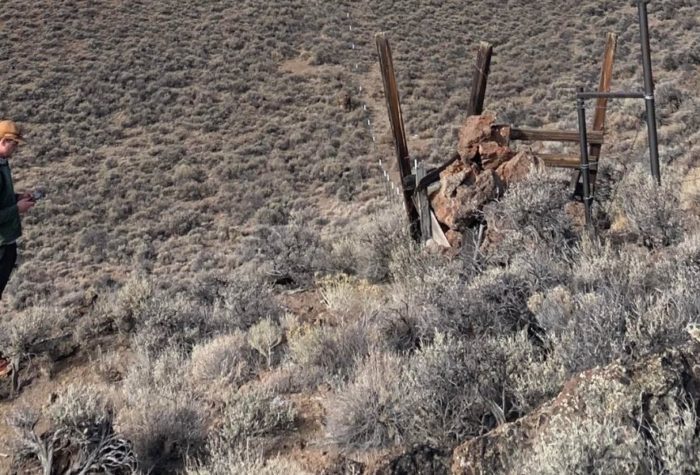
ONDA volunteers made 97,000 acres of wilderness safer for wildlife by pulling the final miles of barbed wire fence out of the cow-free section of the Steens Mountain Wilderness.
Our legal work protected Steens Mountain from industrial-scale energy development when a federal court ruled that the Department of the Interior had failed to consider the impacts of development on crucial winter habitat for the imperiled Greater sage-grouse.
2016
In collaboration with five different land managers, we designed and launched an effort to cool and retain precious desert water by recovering beaver in the John Day River Basin.
2015
ONDA protected Steens Mountain from the impacts of motorized vehicles when a federal court ruled that the Steens Act of 2000 prohibits off-road driving in the mountain’s spectacular Wilderness Study Area. By winning court decisions, protective injunctions, and settlements, ONDA’s legal action had already stopped the BLM from converting more than 125 miles of primitive or overgrown routes into roads on Steens Mountain.
ONDA’s participated in countless efforts that ensured that state and federal plans provided unprecedented measures to protect the sage-grouse from becoming an endangered species. To see that these conservation plans work as intended, ONDA conceived and launched a scientifically rigorous sage-grouse habitat monitoring protocol.
2014
ONDA celebrated 10 years of partnership with the Confederated Tribes of Warm Springs to complete intensive John Day River Basin restoration.
ONDA and the Prineville district of the Bureau of Land Management signed a historic agreement to monitor public lands.
2013
After years of effort by diverse stakeholders, including ONDA, the Malheur Wildlife Refuge adopted a strong Cooperative Management Plan, one that strengthens cooperation and employs science-based management actions to benefit wildlife.
2012
ONDA and Ruby Pipeline signed an agreement which established the Greater Hart Sheldon Conservation Fund to preserve lands and wildlife corridors.
2011
After thousands of hours devoted to compiling route information, creating maps, gathering GPS tracks and waypoints, ONDA established the Oregon Desert Trail, a 750-mile route traversing through some of the most spectacular natural areas of the state’s dry side.
2010
ONDA won a precedent-setting case that required the Bureau of Land Management to acknowledge wilderness values across 7.8 million acres of public lands and to assess future management to protect these areas.
2009
ONDA led successful grassroots campaigns which established the Oregon Badlands Wilderness and Spring Basin Wilderness. Thousands of members of the Central Oregon community and major employers participated in these campaigns.
2008
Through legal action, ONDA protected critical steelhead and bull trout habitat in the John Day River Basin from the impacts of chronic overgrazing.
2005
ONDA helped ensure that the Upper Deschutes Resource Management Plan retired grazing permits and closed all roads in the Badlands Wilderness Study Area, therefore managing it as de facto wilderness.
2002
ONDA helped wolves survive in Oregon, by pushing the Oregon Department of Fish and Wildlife to undertake a planning process and eventually adopt a management plan for endangered wolves.
2000
ONDA led a historic collaborative effort that established the Steens Mountain Wilderness, the first wilderness area in Oregon’s high desert.
1999
ONDA’s successful legal work protected the Wild and Scenic Owyhee River corridor. This river ecosystem, rich with willows and redband trout, was being damaged by livestock grazing.
1994
ONDA helped sensitive populations of pronghorn antelope and sage grouse on Hart Mountain by pressuring the U.S. Fish and Wildlife Service to remove livestock grazing from the mountain.
1991
ONDA members pioneered a method of citizen-led wilderness inventories later adopted by the Bureau of Land Management as a national standard.