Author: Julie Weikel | Published: January 2, 2019 | Category: Essay
Julie Weikel, a longtime ONDA member, wrote this essay about the wild waters of the Pueblo Mountains to nominate them for protection under the Wild and Scenic River act. Read her story and nominate your favorite desert river.
Lying like prehistoric claw marks upon the sagebrush breasts of southeast Oregon’s ancient Pueblo Mountains are five sometimes barely visible streams when viewed from the pickup windows wending their way into Nevada on Hwy 205.
Like all desert waters, these are precious life-affirming courses, sometimes succoring riparian zones measured only in tens of feet. No raging, boat-floating whitewater here, although for brief weeks or even just days each spring, the jubilant celebrating streams move boulders, rip out tree roots, and raise a little canyon hell. Collectively, these creeks gather the snowmelt off Steens sister mountain, the Pueblos, and deliver it most unceremoniously to the few scattered, struggling ranches sprawled on the valley floor. Without expressing gratitude, my grandmother raised up seven strapping, competent folks there with a three-acre garden, a couple of nurse cows and some chickens. There wasn’t water for more.
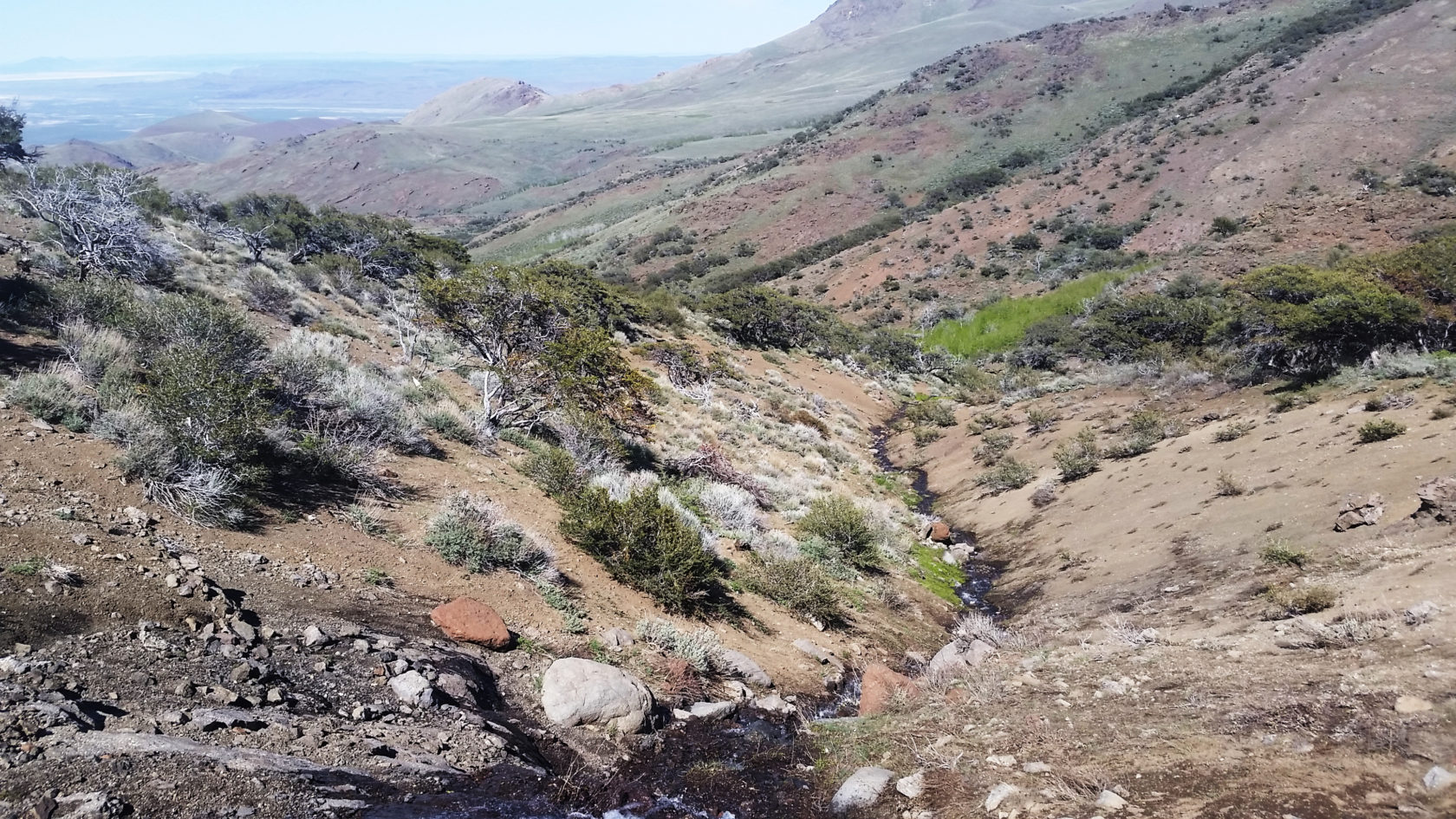
The brush-choked canyons providing guidance to these waters are not issuing much in the way of invitation to any but the most intrepid of hikers. Their invite is to those creatures and plants long evolved to live with the uncertainty of enough water. But high up, in the glacially carved scoops, the waters start peacefully enough in basins of wildflowers screaming to be noticed by pollinators and seed spreaders. Cattle gladly visit these basins and sip daintily at these headwaters. Bighorn sheep and pronghorn joust and gambol here, and sage grouse hens guide their chicks among the abundance of forbs so rare in much of their historic range.
Although Van Horn Creek and her basin might well be the poster child for this array, they should all five, Denio, Van Horn, Little Cottonwood, Arizona, and Willow Creeks, be honored together. While these stalwart mountain fissures care not for our honoring them, all of us see nobility in these short powerful expressions of all that water means to life.