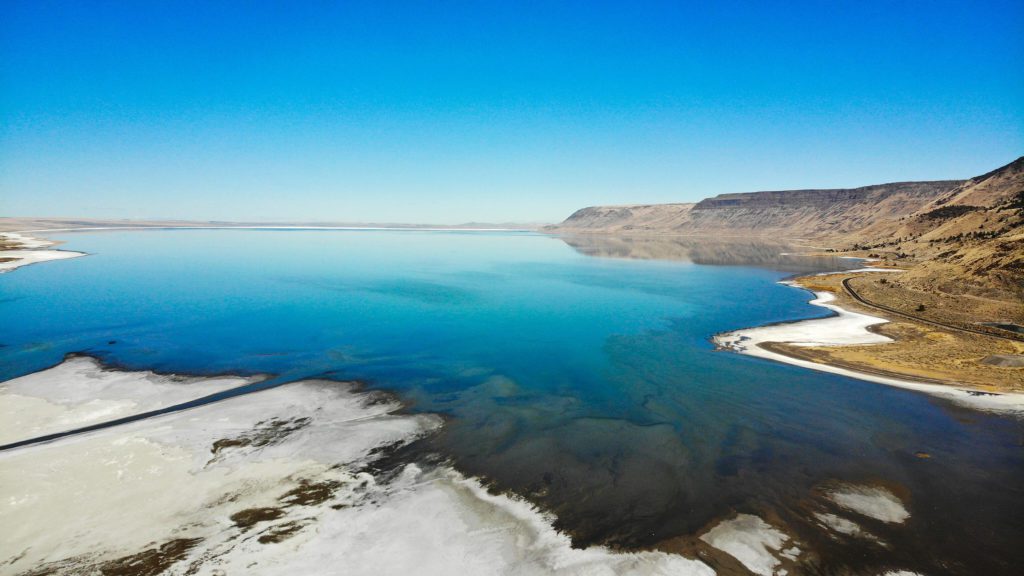
Saving Lake Abert
Lake Abert — and the birds that depend on it — is under constant threat as the ongoing drought exacerbates the impacts of poor water management, resulting in reduced inflows and salinity levels exceeding what the food web can tolerate. The state of Oregon and its regulatory agencies have fallen short of their responsibilities to properly manage, monitor and conserve Lake Abert, contributing to the problems facing this fragile ecosystem today.
However, the state has the opportunity, authority, capacity and the responsibility to conserve and restore Lake Abert using a variety of tools and approaches at its disposal. While the problem is complex and the solutions difficult, there are several important steps agencies must implement to protect and restore Lake Abert.
- Monitor and measure stream flows, groundwater levels, lake levels and water use;
- Enforce decades-old permit conditions at the reservoir to ensure state-identified minimum bypass flows and diversion limits are implemented;
- Develop and adopt instream water rights;
- Continue to support collaborative water management solutions to identify, develop and implement voluntary projects that result in a more reliable water supply to Lake Abert;
- Update the water availability report to prevent new water rights from exacerbating the water management problems in the basin.
Complementing and supporting state action to restore Lake Abert, Congress recently enacted the Saline Lake Ecosystems in the Great Basin States Program Act of 2022. Sponsored by both Oregon Senators Merkley and Wyden, the new program will establish and provide technical support, funding and resources to the U.S. Geological Survey to monitor and assess saline lake ecosystems across the Great Basin, including Lake Abert, and in coordination with the U.S. Fish and Wildlife Service, tribes, state agencies, academic institutions and nonprofit organizations. This program is an unprecedented federal investment in vitally important research on the ecological role of Lake Abert to migratory birds along the Pacific Flyway and management needed to conserve this imperiled ecosystem.
While all of these endeavors are complex, will take time and require tremendous dedication, the state of Oregon has the responsibility to manage water in the region with the long-term health and sustainability of Lake Abert as a primary goal. This responsibility is ultimately rooted in the State’s public trust responsibility to steward natural resources, including water and ecosystems like Lake Abert, on behalf of the public who own these resources. This principle of stewardship is responsible for saving Mono Lake in California in the 1980s and may ultimately be what saves Lake Abert as well.