2026 Twelvemile Creek Fence Construction

listen

Great Horned Owls and Western Screech Owls

Great Horned Owls and Western Screech Owls

voices

Cregg Large, member since 2009

Cregg Large, member since 2009

“I came to Oregon 12 years ago from Texas. Texas, for all its size, has very little public land. Coming to Oregon has made me realize the special gift we as Americans have in our public lands. Volunteering with an organization like ONDA is my way of reciprocating for this gift. Through restoration efforts, I feel we are helping leave a better place than we found it. Through advocating for protection for public lands, we safeguard migration routes for animals and keep the land where it belongs: with the public.”

listen

South Fork Crooked River and Birds

South Fork Crooked River and Birds

Organizer: Jefferson Jacobs

Dates: May 14-17, 2026

Region: Central Oregon Backcountry

Difficulty Rating: Level 5: Extreme

Maximum Group Size: 15 participants

About the place

Oregon’s high desert is home to a diversity of Indigenous people, including the Northern Paiute, Shoshone, Bannock, Wasco, Warm Springs, Yahooskin, Cayuse, Walla Walla and Umatilla peoples organized within several Tribes. These include the Burns Paiute Tribe, Fort McDermitt Paiute and Shoshone Tribes, Confederated Tribes of the Warm Springs Reservation, Shoshone-Paiute Tribes of the Duck Valley Indian Reservation, the Klamath Tribes, the Confederated Tribes of the Umatilla Indian Reservation and others.

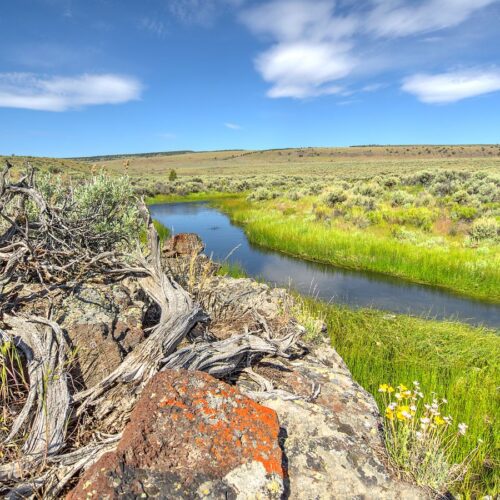
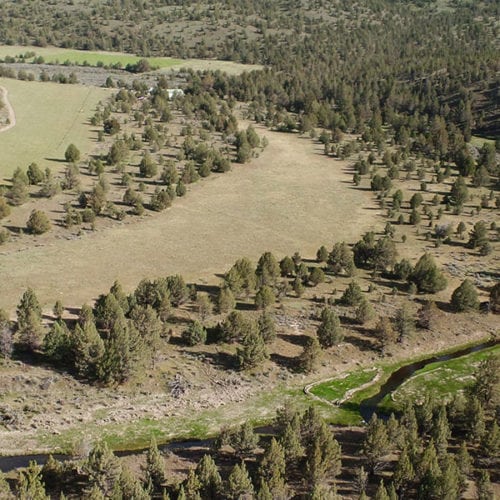
This project is located on Twelvemile Creek and the South Fork Crooked River, both tributaries of Central Oregon’s Crooked River. The Crooked River and its tributaries were once a major spawning ground for migratory fish such as spring Chinook salmon, steelhead trout and Pacific lamprey. Non-migratory fish such as redband trout and bull trout were also abundant. While dams blocked migratory fish passage to the South Fork, redband trout still survive in the watershed. However, heavy agricultural use and the eradication of beavers left this essential habitat unhealthy and limits the recovery of fish populations. Our efforts on the South Fork Crooked River aim to improve ecosystem health and support beavers, whose dam building activities restore native fish habitat and provide many benefits for the entire watershed.

About the stewardship work

This project is an early step in efforts to restore a 3.5 mile stretch of Twelvemile Creek. Volunteers will construct a wildlife-friendly fence across the creek canyon that will protect a future restoration site.

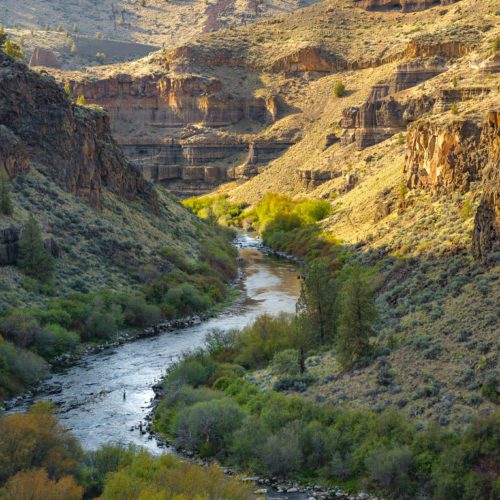
Volunteers will backpack into the creek canyon, where we will establish camp for the duration of the trip. The work each day will involve hiking about half a mile to the project site while carrying personal gear and restoration tools down a steep slope where participants will complete fence-building tasks, such as pounding in metal t-posts and clipping wire to the posts.

Mark Darnell

Trip timeline

  • Thursday, May 14, 12 p.m.: Meet at the parking area and prepare to backpack together to our campsite. Prompt arrival is critical to allow the group to travel together. After establishing camp, we’ll rest, cook and prepare to start work the next day.
  • Friday, May 15 and Saturday, May 16, 8 a.m.: Walk a short distance to the work site and complete planned work. Volunteers should plan to be away from camp all day.
  • Friday, May 15 and Saturday, May 16, 4 p.m.: Return to camp to rest, cook and explore. In the evenings we will also have time for question-and-answer sessions about our restoration strategy.
  • Sunday, May 17, 8 am: No work is scheduled. After breakfast, we will break camp, backpack back to our vehicles and head home.

Camp

We will be meeting at a parking area on a maintained dirt road that is accessible by most vehicles. The backcountry camping site is in a remote location on the South Fork Crooked River, with no toilet facilities or other amenities.

Difficulty

Level 5: Extreme

The physical demands of this trip are extremely strenuous and involve working in rugged, backcountry terrain. Access to the campsite and work area requires a minimum hike of two miles over rocky ground and a steep, 400-foot descent into the canyon while carrying a backpack. Wading across the shallow creek on slick stones to complete work on both sides may be requested of some volunteers.

Participant responsibilities

Volunteers provide their own transportation to and from the trip. Participants are also responsible for providing their own food, water filter, and a backpack capable of carrying all of their personal camping gear. Participants should check the weather in advance and bring sufficient attire and layers for a full day outdoors. Sturdy off-trail ankle-high boots are required for this trip. Lightweight shoes for crossing the creek are recommended in addition to hiking boots. We also recommend bringing your own work gloves to provide a comfortable fit, but it is not required.

Gear provided

ONDA will provide all of the training, tools and supplies required for the work. We will also provide some group camping equipment such as an extra water filter and a latrine. Extra safety equipment such as gloves and eye protection will be available if needed.

Registration

An ONDA registration application and medical form are required for this trip.

Join Waitlist

Approximately two weeks after submitting your registration application, you will receive an email outlining the trips where you are a confirmed participant. We will also share when trips are full and if you’ve been placed on the waitlist.

Six weeks before the start of the trip, the trip leader will send out an email reconfirming participation. Based on responses, any open spaces will be filled with people from the waitlist.

Three weeks before the trip start date, registered and confirmed participants will receive driving instructions, carpooling options, maps, and additional information in an email sent by the trip leader.

Contact the trip leader with questions.


Stewardship Trip Registration Tips

Author: Gena Goodman-Campbell |  Published: January 14, 2026  | Category: How-To How to sign up to volunteer on one of ONDA’s stewardship trips Thank you for your interest in working […]

Read More

Wilderness Inventories, and Why They Matter

Author: Mark Salvo | Published: September 24, 2025  | Category: Brief Update This article originally appeared in the Fall + Winter 2025 Desert Ramblings Newsletter. The foundation of public land […]

Read More

Species Spotlight: Redband Trout

Author: Scott Bowler|  Published: May 21, 2025  | Category: Species Spotlight This article originally appeared in the Spring + Summer 2025 Desert Ramblings Newsletter. Conservation efforts targeting this iconic desert […]

Read More

Species Spotlight: Gray Rabbitbrush

Author: Scott Bowler  |  Published: November 14, 2024  | Category: Species Spotlight This article originally appeared in The Source Weekly on November 13, 2024. The many uses and attributes of […]

Read More

Running in the Badlands

Author: Renee Schiavone  |  Published: October 10, 2024  | Category: Where-To This article originally appeared in The Bulletin on October 10, 2024. Central Oregon’s “Backyard Wilderness” features 50+ miles of […]

Read More

Look Back: A Decade of Restoration

Author: Gena Goodman-Campbell  |  Published: October 25, 2023  | Category: Look Back This article originally appeared in the Fall + Winter 2023 Desert Ramblings Initial phase of restoration on the […]

Read More

The Juniper Paradox

Author: Gena Goodman-Campbell  |  Published: September 26, 2023  | Category: Species Spotlight This article originally appeared in The Source on September 20, 2023. Both iconic and beloved in Oregon’s high […]

Read More

Where-To:
Soak Up Long Summer Days

For a Perfect Summer Day, Head to a Desert River With the sun rising before 6 am and twilight extending after 9 pm, summer days leave plenty of space for […]

Read More