Advocating for healthy high desert public lands comes in many forms—educating your community, contacting your representatives, or writing letters to the editor. Sometimes, advocacy means lacing up your boots and getting out into the desert. ONDA’s On-the-Ground Advocacy opportunities are self-directed outdoor projects that volunteers can complete independently to support efforts to protect, defend, and restore Oregon’s high desert.
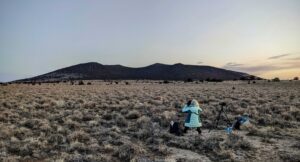
How it Works
ONDA provides assignments and resources so volunteers can work independently. In the process, volunteers learn new skills and support conservation work—giving their high desert adventures an elevated purpose. Volunteers receive guidance from ONDA, but work mostly on their own.
Current Opportunities
Habitat Monitoring: Research Natural Areas
Volunteers will support wildlife research, conservation, and science-based land management practices when they visit and take photos to monitor areas in Oregon’s high desert known as “Key Research Natural Areas.” These areas are public lands with exceptional greater sage-grouse habitat that the Bureau of Land Management closed to cattle grazing in 2015. However, BLM has not consistently enforced this closure. By capturing on-the-ground conditions, volunteers will identify and document areas where illegal grazing has occurred.