Author: Gena Goodman-Campbell | Published: July 29, 2026 | Category: Update
An update from ONDA’s stewardship director: what we know and what comes next
On July 15, a lightning strike near Cove Creek on the Pine Creek Conservation Area sparked a fire that quickly grew, fueled by high winds and extremely dry conditions. Originally named the Cove Creek fire, this blaze soon merged with others burning in the Lower John Day River Basin to become the Rowe Creek Complex, which as of this writing has burned over 200,000 acres.
When I first heard the news that a fire had started at Pine Creek Conservation Area, I held out hope that it would spare ONDA’s ongoing habitat restoration project on Robinson Creek. Sadly, those hopes were dashed within days when we received word that the fire had scorched the entire 34,000-acre Pine Creek Conservation Area where ONDA has worked for over two decades. The fire also burned portions of the Spring Basin Wilderness Area, the Painted Hills unit of the John Day Fossil Beds National Monument, and Sutton Mountain.
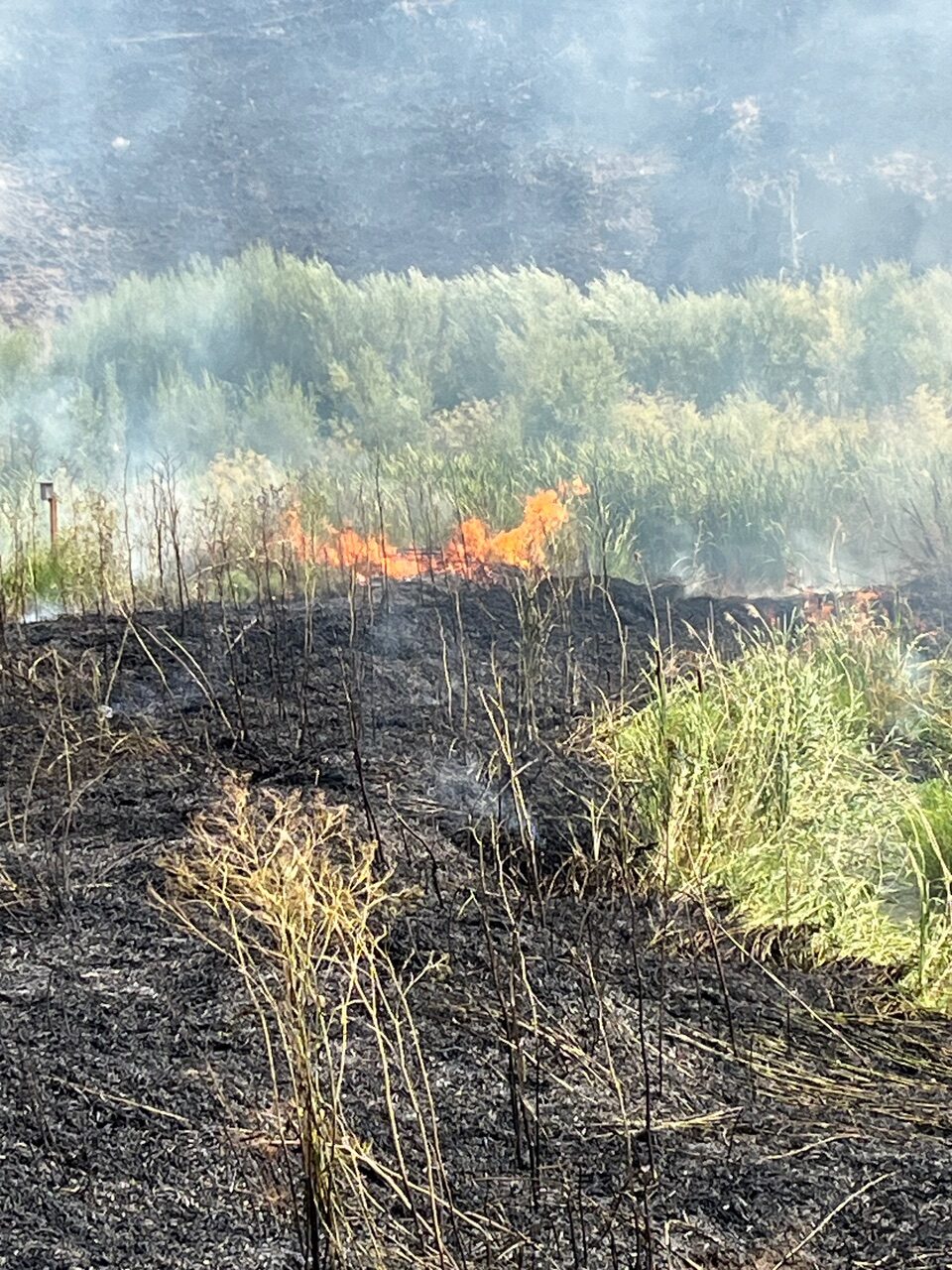
I was heartbroken to see photos of the once green and gold rolling hills, so familiar to me after many years of working there, transformed into a blackened, charred landscape. This incredible area encompasses important fish and wildlife habitat for species like bighorn sheep and steelhead, as well as beloved places to hike, fish, and volunteer for many in the ONDA community.
Fire is a natural, and even necessary, part of the desert ecosystem, helping species like quaking aspen regenerate by prompting the spread of new shoots where larger trees once stood. However, the fires currently burning across Central Oregon and the John Day River Basin are being fueled by dry, highly flammable non-native annual grasses, like cheatgrass and medusahead, that edge out native plants. Invasive species of grasses often thrive after fire, as their seeds can withstand hotter temperatures than native bunchgrasses. And as annual plants, they have a head start on the growing season over native perennial plant species. As we watch the charred hills begin to green up again in the coming years, a chief concern will be whether native bunchgrasses and wildflowers are able to compete with invasive annual grasses.
In spite of these challenges, the Pine Creek Conservation Area ecosystem is resilient, and we are optimistic that it can effectively recover from the fire. While some historical impacts of heavy livestock grazing and other agricultural uses remain on the landscape, the Confederated Tribes of Warm Springs acquired the property and has managed it for the conservation of fish and wildlife for more than 20 years. This approach has sustained native plants, limited the spread of invasive annual grasses, and supported stream restoration efforts and the return of beavers to Pine Creek, all of which create a resilient ecosystem. Along with Hart Mountain National Antelope Refuge, where ONDA is currently leading a wildfire recovery research project, Pine Creek Conservation Area will provide an additional example of how the vegetation and wildlife habitat of ungrazed desert wildlands can recover after a major fire.
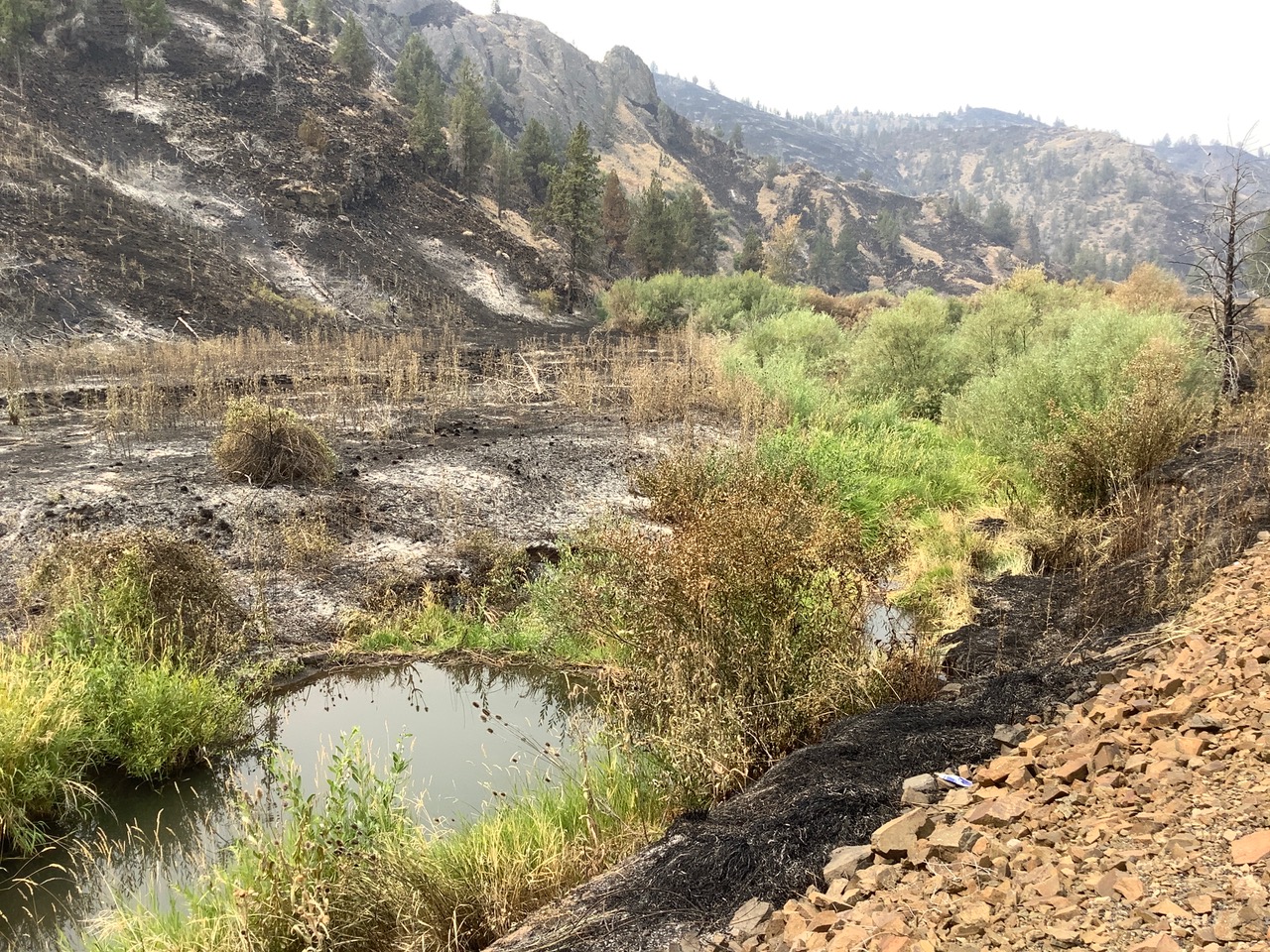
And thanks to the collaborative stream restoration efforts of ONDA, the Tribes, and numerous volunteers, Pine Creek itself has transformed into a lush oasis of beaver ponds and wetlands, many of which remained green as the fire blackened the surrounding landscape. Even in the immediate aftermath of the blaze, ducks, muskrat, and other wildlife were observed taking refuge in the ponds along Pine Creek. These oases, created by beaver dams that remain intact and shaded by willows and cottonwood trees ONDA volunteers planted, will support resiliency and recovery for the many fish and wildlife that depend on this habitat.
Finally, ONDA volunteers and supporters will play a key role in restoring habitat at Pine Creek in the years to come. This fall, we are set to begin the implementation phase of our most ambitious restoration project to date, to revitalize four miles of Robinson Creek in the heart of the conservation area. While it is too soon to know how the fire will affect Robinson Creek and Pine Creek, we are committed to supporting the long-term recovery of Pine Creek Conservation Area and the Robinson Creek watershed.
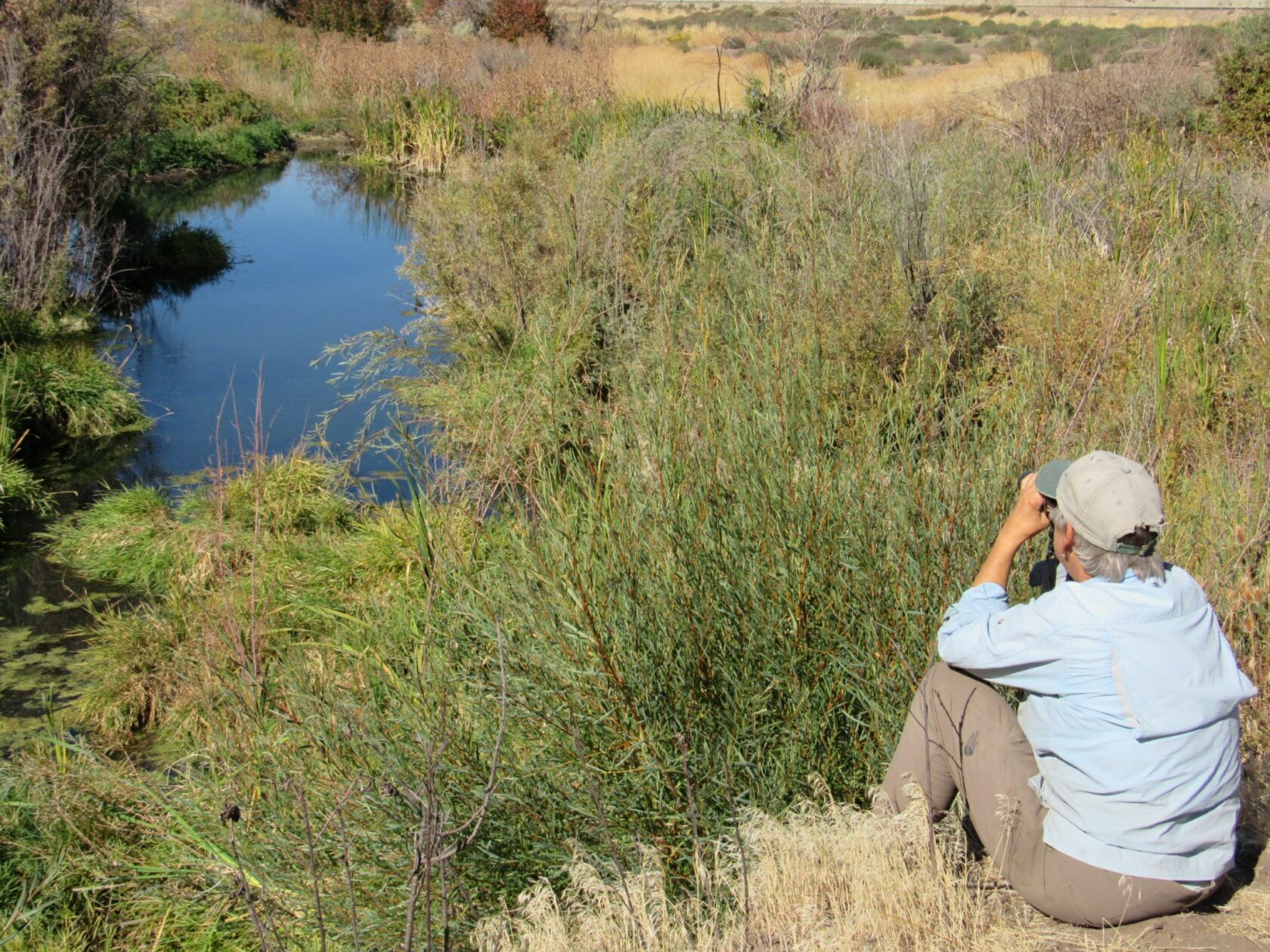
After a fire burns a place you love, grief and hope live side by side. On the one hand, I struggle to reconcile the blackened landscape with what my eyes expect to see along the familiar curves of Highway 218 as it rambles along Pine Creek. On the other, I hold out hope that nature knows best how to heal itself. And it gives me great solace to know ONDA’s depth of experience stewarding the region will ensure this incredibly important watershed thrives.