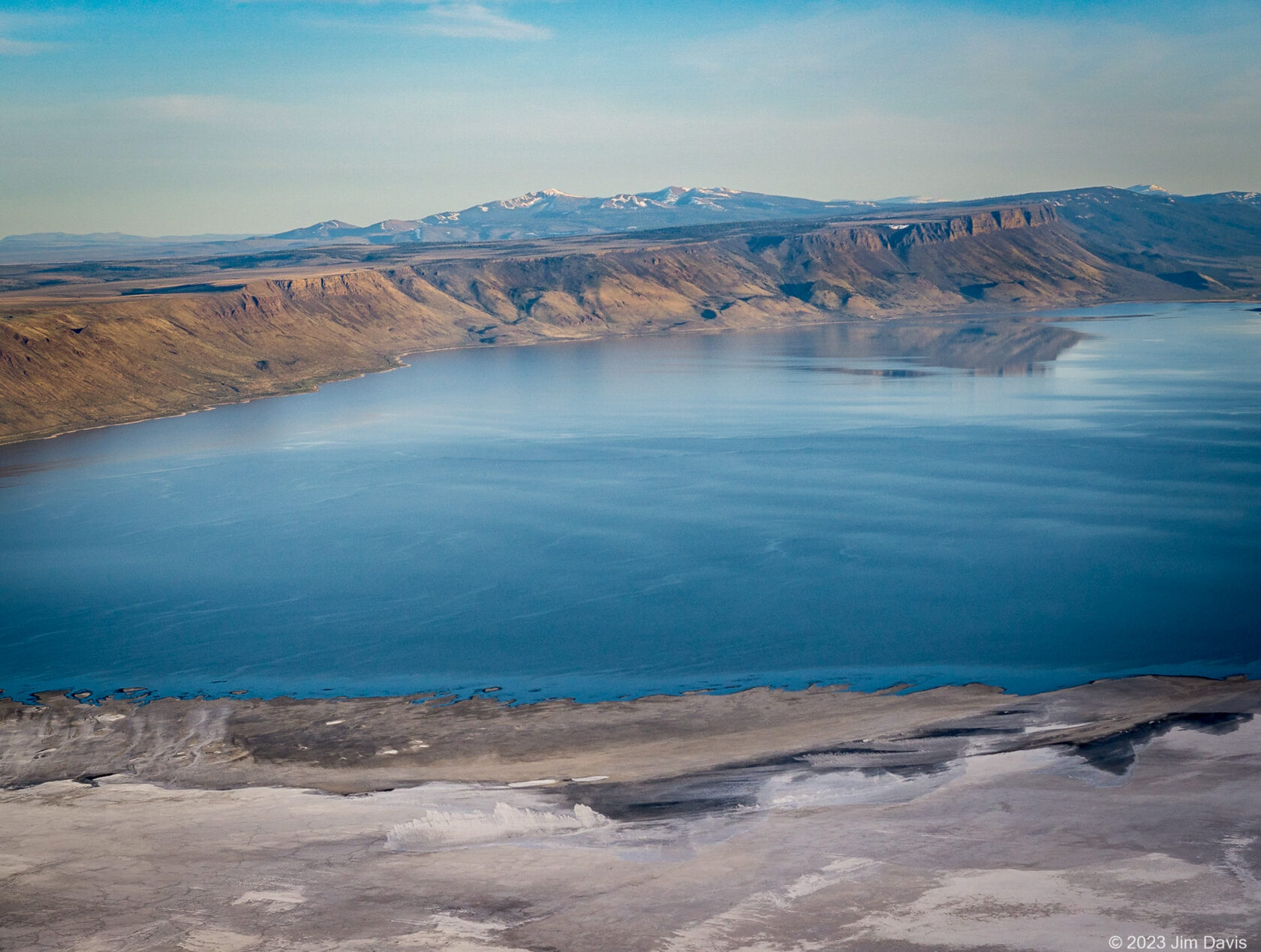
Oregon’s high desert public lands are extraordinary, with outstanding attributes that include fragile plant communities found nowhere else, precious sites of deep cultural significance, colorful geothermal pools, and sensitive wetlands. Many of the places that preserve these irreplaceable values have been specially designated as Areas of Critical Environmental Concern.
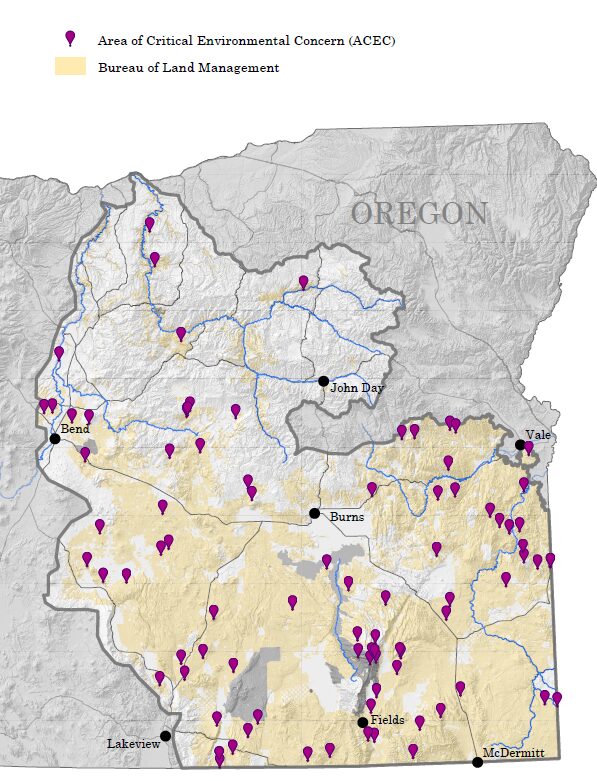
There are 83 ACECs in Oregon’s high desert, ranging in size from 50 acres to over 55,000 acres. They include some of the region’s most iconic natural and cultural resources and encompass many areas where ONDA focuses our conservation efforts. Some ACECs are managed as Research Natural Areas, intended to support scientific research on high desert ecology. ONDA has spent years advocating for proper management of these areas to improve our understanding of the condition and resilience of sagebrush habitats.
What are ACECs?
ACECs are public lands with exceptional natural features, habitat for imperiled species, sensitive ecosystems, cultural resources, historic significance, or scenic values. By law, the Bureau of Land Management is required to prioritize the designation, inventory, and protection of ACECs, and manage these landscapes to prevent irreparable damage to the unique value or resource they contain.
How are ACECs designated?
Anyone from the public can nominate an area to be designated as an ACEC—including individuals and organizations—or the BLM can make a nomination. The BLM will consider the nomination if the area meets its criteria for “relevance” and “importance.”
To meet the relevance criteria, the area must have significant natural, historic, cultural, or scenic values or resources. There are several ways an area can meet the BLM’s importance criteria, such as having fragile and rare qualities, being significant to Tribal Nations, or having “special worth.” There is typically an opportunity for public input during the bureau’s ACEC evaluation process.
Management of ACECs varies. In some cases, they are open to recreation and other uses, as long as those activities are compatible with protecting the resources and values of the ACEC.