2026 Pine Creek Spring Restoration #2
watch
Stewardship Pronghorn Fence
Stewardship Pronghorn Fence
fact
Bitteroot
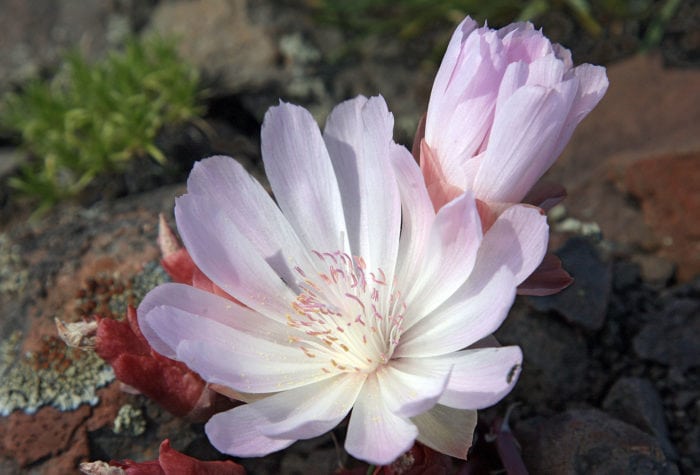
Bitteroot
Bitteroot blooms on north-facing cliffs in western North America.
The Paiute name for bitteroot is kangedya. Traditional Native American uses of the plant included eating the roots, mixed with berries and meat, and using the roots to treat sore throats.
listen
Cottonwood Canyon Riparian Soundscape
Cottonwood Canyon Riparian Soundscape
Organizer: Gena Goodman-Campbell
Dates: May 28-31, 2026
Region: John Day River Basin
Difficulty Rating: Level 3: Challenging
Maximum Group Size: 15 participants
About the place
This project takes place on the Pine Creek Conservation Area, which is owned and managed by the Confederated Tribes of Warm Springs. Pine Creek is within the traditional lands of the Tenino people, a band of the Warm Springs Tribe and the Northern Paiute people. The area is also part of the traditional lands of the Cayuse, one of the Confederated Tribes of the Umatilla Indian Reservation.
Pine Creek Conservation Area is located near Clarno, Oregon and is a protected property managed for its wildlife habitat. Pine Creek is a tributary of the John Day River and runs for over 10 miles through the conservation area. The creek provides important habitat for steelhead and a diversity of wildlife and birds. ONDA has worked to restore Pine Creek Conservation Area for over 20 years, and this project contributes to this effort by restoring a system of springs that feed Pine Creek.
About the stewardship work
This project will remove juniper trees to increase water levels in small, spring-fed streams and in Pine Creek to support ecosystem health. Volunteers will use loppers and handsaws to remove small junipers that have spread beyond their typical range. Volunteers will then use this material to slow seasonal stream flows, retaining water that supports existing native plants and readies the site for future plantings.
Trip timeline
- Thursday, May 28, 4 p.m.-6 p.m.: Meet at the campsite near the project location to set up camp. After everyone has arrived, we will have an orientation on the upcoming work.
- Friday, May 29 and Saturday, May 30, 8 a.m.: Walk a short distance to the work site, where we will begin working our way up the stream. Volunteers should plan to be out all day and be prepared for a full day of work.
- Friday, May 29 and Saturday, May 30, 4 p.m.: Return to camp to rest, cook, and explore.
- Sunday, May 31, 8 a.m.: No work is scheduled. After breakfast, we will break camp and head home.
Camp
We will be car-camping at a campground just off of Highway 218 on the Pine Creek Conservation Area. The campground is on a gravel road and is accessible for any vehicle. There are pit toilets at the campground, but there is no potable water.
Difficulty
The physical demands of this trip are challenging. Work involves hiking over uneven ground, using hand tools such as shovels, loppers, clippers, and handsaws, working in thick and prickly vegetation, and bending and kneeling for prolonged periods.
Participant responsibilities
Participants are responsible for providing their own transportation to the project location, as well as camping gear, food and water/beverages for the weekend. We recommend bringing a daypack that you are comfortable carrying out to the worksite with your lunch, water and sunscreen or any additional items you need for a full day of work outdoors. Participants should check the weather in advance and bring sufficient attire and layers for a full day outdoors. Sturdy hiking boots, long pants, long sleeves and eye protection will be required for the work. We also recommend bringing your own work gloves to provide a comfortable fit, but it is not required.
Gear provided
ONDA will provide all of the training, tools, and supplies needed to complete the work. Along with expert leadership, we will also bring some group camping gear like tables, chairs, shade tents, and some extra potable water and snacks to share. Extra safety equipment such as gloves and eye protection will be available if needed.
Registration
An ONDA registration application and medical form are required for this trip.
Join Waitlist
Approximately two weeks after submitting your registration application, you will receive an email outlining the trips where you are a confirmed participant. We will also share when trips are full and if you’ve been placed on the waitlist.
Six weeks before the start of the trip, the trip leader will send out an email reconfirming participation. Based on responses, any open spaces will be filled with people from the waitlist.
Three weeks before the trip start date, registered and confirmed participants will receive driving instructions, carpooling options, maps, and additional information in an email sent by the trip leader.
Contact the trip leader with questions.
Your Trip Leader
This trip will be led by Nick Kilby, ONDA's Stewardship Coordinator. If you have any questions or need additional information you can contact him via email at nkilby@onda.org.
Meet NickRestoring Desert Ecosystems
ONDA works with partners, communities, and the public to improve habitat quality, create healthy ecosystems, sustain clean water, and support biodiversity in the high desert’s most ecologically important areas. What […]
Read More