Author: Nick Kilby, Stewardship Coordinator | Published: October 2, 2026 | Category: Essay
This article originally appeared in The Bulletin on September 24, 2026.
Beavers seem to be everywhere lately, and not just because Oregon is the Beaver State. From local newspapers to national outlets, beavers are being posed as the answer to some of the West’s toughest problems, including wildfire, drought, and climate change.
You would be right to imagine beavers as a kind of habitat hero, but like many good hero stories, much of their success hinges on the fortitude of their sidekick. Humans—believe it or not—can be a valued sidekick to beavers. We just have to set the conditions for their success.
On the streams Oregon Natural Desert Association works to restore, we aim to give beavers the tools they need to succeed, so that we can get out of the way and let them do what they naturally do best—build. Desert waterways like the South Fork Crooked River, where ONDA has worked for over a decade to restore habitat for fish and wildlife, show how thriving beaver populations are key to healthy ecosystems.
A Big Dam Deal
Beavers are best known for building dams, which act like speed bumps in waterways, slowing stream flows so scarce desert water lingers instead of rushing through. That gives water time to form deep pools and soak into streambanks, where it stays cool, recharges aquifers, and keeps streamside plants green, even in the driest months. Many desert fish and wildlife species flourish thanks to this beaver-improved habitat, which can also provide refuge for wildlife and plants during heatwaves and wildfires. Beaver habitat can even act as a natural firebreak and is often the first place that plants and wildlife recover after fire.
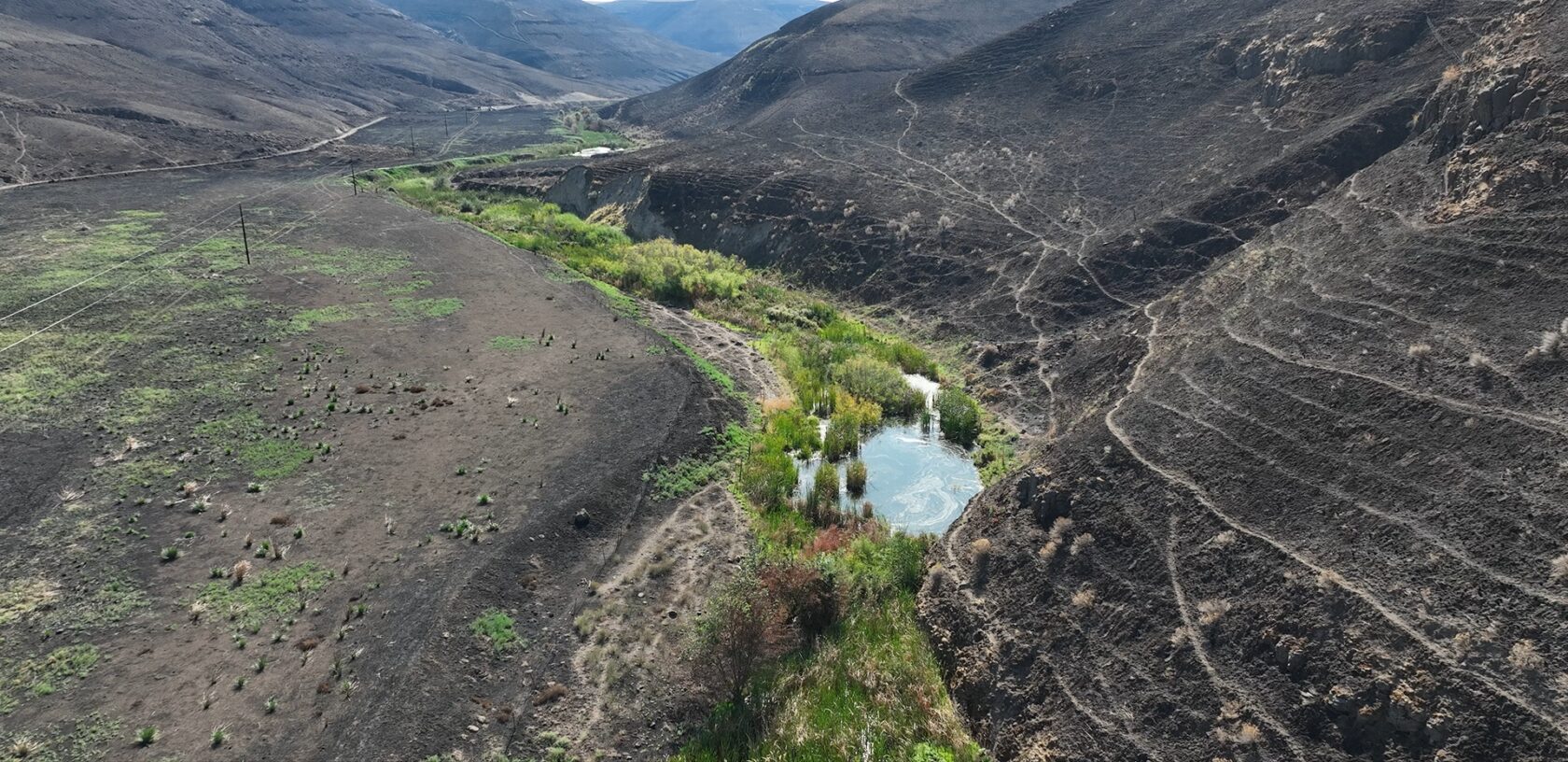
Few animals play a more critical role in the ecosystem. But here’s what often gets left out of the hype: a beaver can’t do any of this if the environment isn’t primed for it.
Helping Beavers Live up to the Hype
Rising from springs amidst Central Oregon’s sagebrush steppe, the South Fork Crooked River was once a flourishing ecosystem underpinned by thriving beaver populations. But over the last two centuries, fur trappers decimated beaver numbers, while livestock grazing diminished the quality of streamside habitat. When ONDA first started working on the South Fork Crooked River, we sadly found more beaver skulls than any other signs of beavers. The environment simply couldn’t offer beavers what they needed to survive, let alone thrive. That was the primary issue we set out to address to restore healthy fish and wildlife habitat.
Like any animal, beavers need safe homes to raise their young, with reliable water to create the deep pools they use to hide from predators and sufficient food to support a growing family. Without certain species of streamside vegetation like willow, cottonwood, and aspen, beavers will go hungry and lack materials needed to build dams.
On the South Fork Crooked River, ONDA and our partners acted like developers building a neighborhood for a future workforce—except in this case, the workforce we were hoping to attract was beavers. We built structures using willow and juniper that mimic beaver dams to slow stream flows and deepen pools, offering beavers security as they consider moving in. Most importantly, we planted tens of thousands of willows and other native trees along the streambanks to provide food and building materials for future beaver inhabitants.

After years of work on the South Fork Crooked River, beavers finally returned, building dams and creating wetlands that support an abundance of life. Then, last spring, ONDA was ecstatic to see the ultimate sign of success: baby beavers. When ONDA’s wildlife cameras showed that the resident pair of beavers had welcomed not one, but two kits, we cheered the growing family. We soon got right back to work expanding our planting areas on the South Fork Crooked River, so that the next generation of beavers would be set up to thrive and expand.
As beavers multiply so do the benefits to the entire desert ecosystem. By encouraging water to soak into the floodplain surrounding a stream, beaver dams store heavy spring stream flows underground. This results in cooler water year-round and can even restore flows to streams that have previously run dry in the summer. In this way, beavers’ humble yet heroic dam building could help many threatened species, from redband trout to sage grouse, adapt to survive a changing climate.
Our South Fork Crooked River project demonstrates how an area can quickly rebound when beavers get a little help from an unlikely sidekick. But there are still many miles of desert waterways waiting for that same head start. You can be a part of this effort by volunteering on a restoration trip or supporting ONDA’s work to build resilient ecosystems. Not all heroes wear capes; some build dams.