Author: Mark Salvo | Published: May 27, 2026 | Category: Deep Dive
The past, present and uncertain future of grazing management
Domestic livestock were introduced to what became the American West more than 250 years ago. Cattle and sheep, horses, and even goats, soon exacted a huge toll on fragile, arid landscapes that did not evolve to withstand intensive grazing pressure, including Oregon’s high desert.
The consequences were profound. Tens of millions of livestock wandered across the West, displacing wildlife, eliminating native grasses and wildflowers, trampling soils, despoiling waterways, and degrading habitat nearly everywhere.
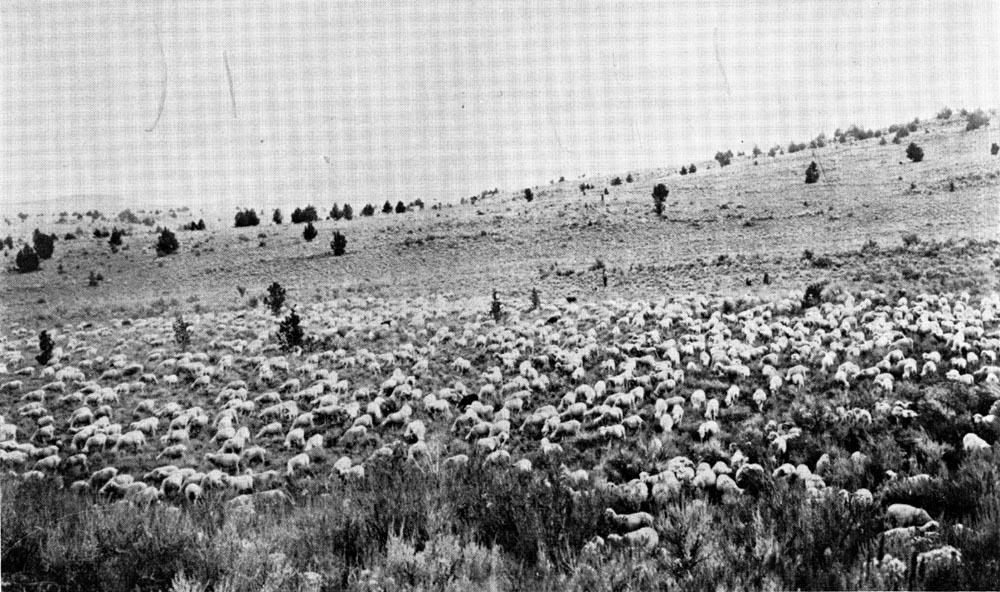
By the early twentieth century, the damage to western public lands had become impossible to ignore. Grazing contributed to severe erosion and dust storms, culminating in an ecological crisis during the Dust Bowl. In a striking historical coincidence, the same day Congress voted to pass the Taylor Grazing Act in 1934, a massive dust storm swept eastward into Washington, D.C. from heavily grazed deserts and grasslands in the West. The event became a powerful lesson of what unchecked grazing could do to our public domain.
The Taylor Grazing Act represented the federal government’s first major attempt to regulate livestock use on public lands. Although flawed and riddled with erroneous assumptions, the law acknowledged an important reality: grazing on public lands requires management and limits. Over the following decades, Congress continued refining public lands grazing policy as agencies struggled to address chronic degradation across tens of millions of acres.
One of the most significant reforms came with passage of the Federal Land Policy and Management Act in 1976. The law directed the Bureau of Land Management to manage public lands for “multiple use,” which required balancing livestock grazing with wildlife conservation, watershed protection, cultural resource preservation, recreation, and other public values. It also ushered in a greater emphasis on monitoring, public participation and transparency in decision-making, and adaptive management to achieve these new standards applicable to 155 million acres of federal public land.
Public Lands Grazing Management Today
These precepts—monitoring, transparency, science, public involvement—remain critically important today. Climate change, prolonged drought, invasive annual grasses and increasingly destructive wildfires are placing unprecedented pressure on western public lands. In Oregon’s high desert, management has become increasingly challenging across the region’s 12 million acres of public lands, where livestock production must also account for ecological integrity, soil health, water quality, native biodiversity, endangered species recovery, and the long-term ecological resilience of sagebrush steppe.
This is where Oregon Natural Desert Association and our community come to bear. We advocate for robust analyses and planning, grounded in the best available science, informed by regular monitoring and public input, and responsive to changing ecological conditions. Responsible grazing management requires constant, careful evaluation, transparency, and a plan to adapt when landscapes show signs of stress or decline.
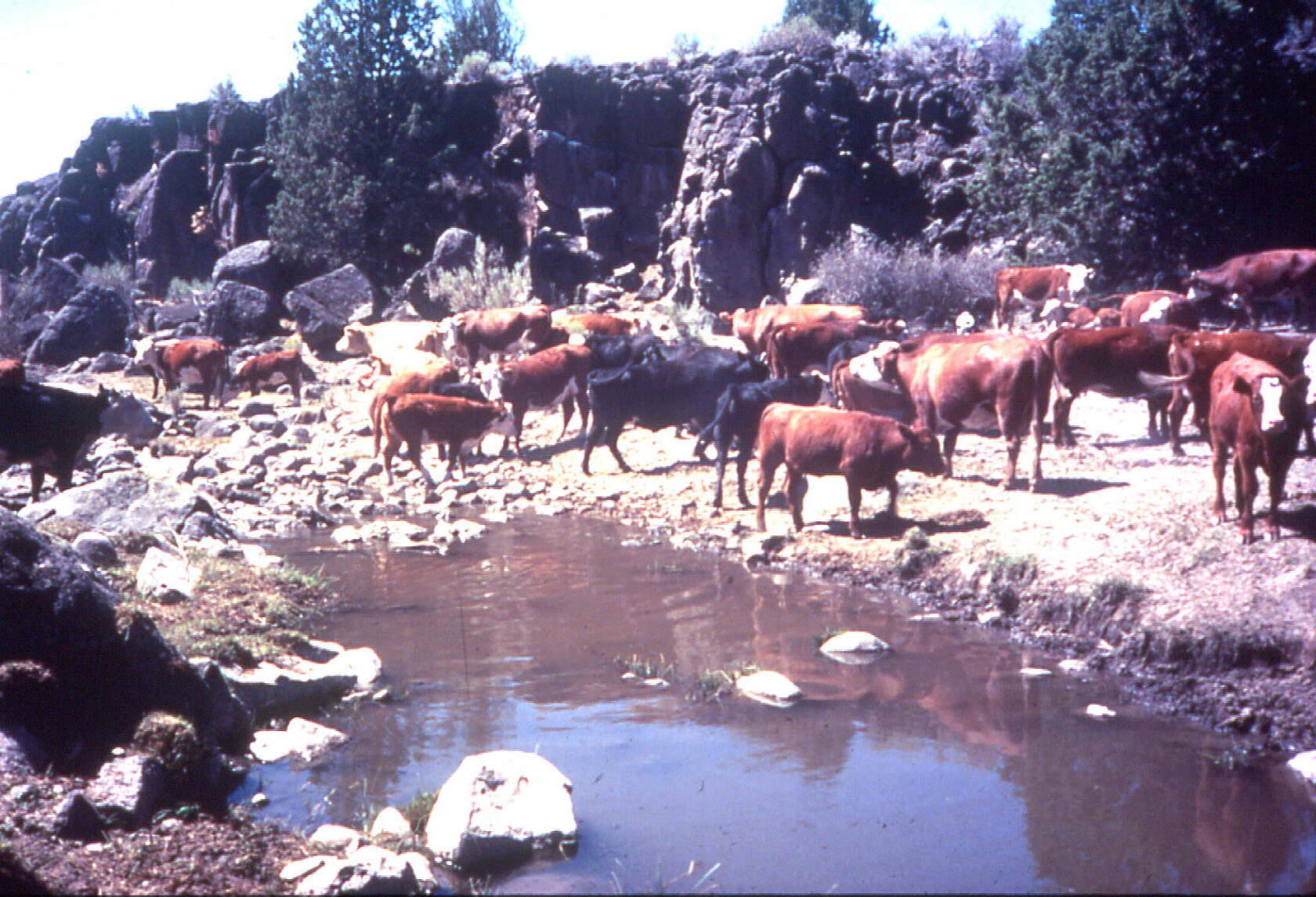
Unfortunately, federal agencies sometimes fail to abide by these standards (and in some cases, agency staff are even prevented from doing so by politically motivated mandates from administration appointees). ONDA and our partners have occasionally had to intervene to ensure the BLM implements its own commitment to science-based public lands management. One ongoing effort involves approximately 22,000 acres of public land where the agency previously decided to exclude livestock grazing in order to create “control sites” where scientists can study how sagebrush ecosystems recover after grazing pressure is removed. Though these areas represent only a tiny fraction of grazed public lands in Oregon’s high desert, the agency has declined to secure them from wandering livestock, forcing ONDA to apply legal pressure to uphold the most basic of research opportunities.
While strong advocacy and legal enforcement are necessary, ONDA also recognizes that collaboration can often be more productive than conflict. We participate in local working groups across eastern Oregon, attend Oregon State University range management workshops and field tours, and regularly engage with BLM staff, scientists and grazing permittees to consider practical improvements to grazing management. We often find common ground with these diverse and contrary interests on the need for healthier and more sustainable long-term grazing practices.
Now, all this progress is under threat.
Trump and “Make America Graze Again”
The Trump administration is proposing sweeping changes to federal grazing regulations that would curtail decades of work to improve public lands management. The revised rules would weaken environmental review, obscure agency decision-making, restrict opportunities for public input, and diminish the role of science in grazing management decisions. At the same time, the new policy would direct the BLM to increase livestock grazing across millions of acres of western public lands without regard to grazing suitability or compatibility with other management goals.
Taken together, these changes would drag public lands management backward, toward the very conditions that prompted federal grazing reform nearly a century ago—a return to a “Wild West” approach that prioritizes short-term livestock production over long-term ecological health and public accountability.
The Trump team has posted a list of false claims to justify throwing out the current federal rules and best practices. Here, ONDA sets the record straight on three of the most galling claims.
Myth: Public lands grazing is essential to the nation’s beef supply.
Fact: Only two percent of the nation’s beef supply comes from public lands grazing. Further increasing grazing on federal lands would have little measurable impact on beef production or prices, while potentially causing permanent ecological harm to western landscapes and Oregon’s high desert.
Myth: More livestock grazing is necessary to reduce wildfire risk.
Fact: Scientific research—including studies supported by the livestock industry itself—indicate that too much grazing can actually worsen fire conditions by degrading native perennial grasses and encouraging the spread of highly flammable invasive annual grasses such as cheatgrass.
Myth: Livestock grazing on public lands is already well managed.
Fact: Millions of acres of public lands remain degraded by chronic livestock grazing, including damaged riparian areas, eroded soils, impaired water quality and fragmented wildlife habitat. Reducing transparency, undermining science and monitoring and weakening existing safeguards will likely accelerate these problems rather than solve them.
The Role of ONDA’s Community
Public lands management should reflect the best available science, transparent public processes, and a commitment to preserving ecological integrity for future generations. These are principles ONDA has worked for decades to uphold and what is required under the laws that govern public lands management.
Oregon’s high desert cannot afford a return to the failed management practices of the past. We must push back against Trump’s proposed changes and maintain the role of science, monitoring, transparency and public involvement in the management of grazing on public lands. This requires that we continue to advocate, rely on the courts to enforce federal law when necessary, and elevate collaboration over conflict wherever possible in our pursuit of healthy public lands.
Thank you for joining us in speaking out against these proposed changes and supporting thriving desert wildlands in Oregon.