Hart Mountain National Antelope Refuge

Tim Lyden

The Place

Located in the Greater Hart-Sheldon region in southeastern Oregon, Hart Mountain National Antelope Refuge is among the most important remaining sagebrush strongholds in the American West. While the refuge was established to protect pronghorn and their habitat in the 1930s, the land carries a rich cultural history dating much further back. The traditional homeland of the Northern Paiute, the refuge and the Greater Hart-Sheldon region preserve an abundance of sites used by people for thousands of years. Stretching more than 278,000 acres, ONDA prioritizes restoration and conservation at the refuge because of its remarkable sagebrush habitat, which supports pronghorn, greater sage-grouse, California bighorn sheep, redband trout, hundreds of bird species, and many more.
Jim Oleachea

Zachary MacCoy   Website

Jon Muyskens

Tara Lemezis

ONDA

ONDA

Restoration Goals

In 1990, domestic livestock were removed from the refuge, ushering in an era of habitat recovery, particularly for the arid region’s essential streams. Yet today, many streams across the refuge still bear the scars of historical grazing: eroded, incised channels that run dry and a lack of trees and shrubs along their banks. Recent catastrophic wildfire also impacted refuge streams, compounding existing habitat issues. And, natural stream habitat recovery has been limited by a complete absence of beavers, a vital keystone species that have historically thrived at Hart Mountain.

ONDA’s restoration goal is to improve stream health by mimicking the benefits of beavers until they can make a comeback, particularly the remarkable ability of the species to efficiently manage vital desert waters to create a thriving ecosystem.

Restoration Actions


Retaining scarce desert waters with natural dams
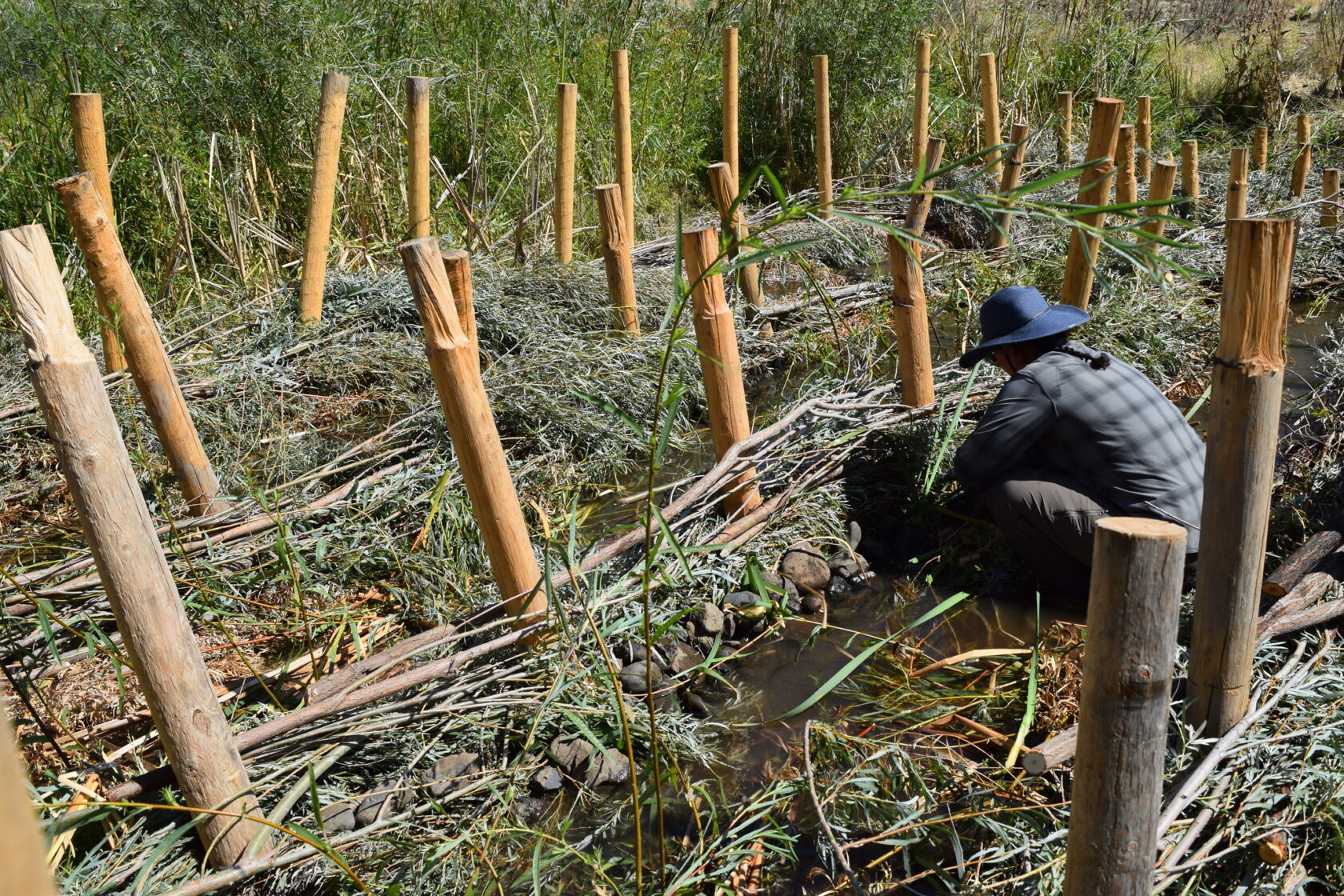
A volunteer finishes installation of a beaver dam analogue
Building beaver dam analogues helps retain scarce desert waters. Photo: Maria Johnson

ONDA installs natural in-stream structures known as beaver dam analogues to slow water flows and increase groundwater levels. These small, hand-built structures force water to infiltrate streambanks, storing precious water on the landscape for far longer. This water allows existing streamside vegetation to flourish and sets the stage for future plantings to further improve wildlife habitat. Adding beaver dam analogues also enhances resilience to wildfire and floods. The restoration work involves collecting and transporting natural materials to the project site and wading in the stream to incorporate these materials into the dams.


Water table and vegetation monitoring
Volunteer conducts water table monitoring on the South Fork Crooked River
Volunteer conducts water table monitoring on the South Fork Crooked River. Photo: ONDA

ONDA measures soil moisture at potential planting sites to assess soil conditions and suitability for future planting. This is a critical first step to ensuring that any trees and shrubs we plant will have enough water to survive. The restoration work involves installing water table wells and digging test pits along streambanks.


Planting native trees and shrubs
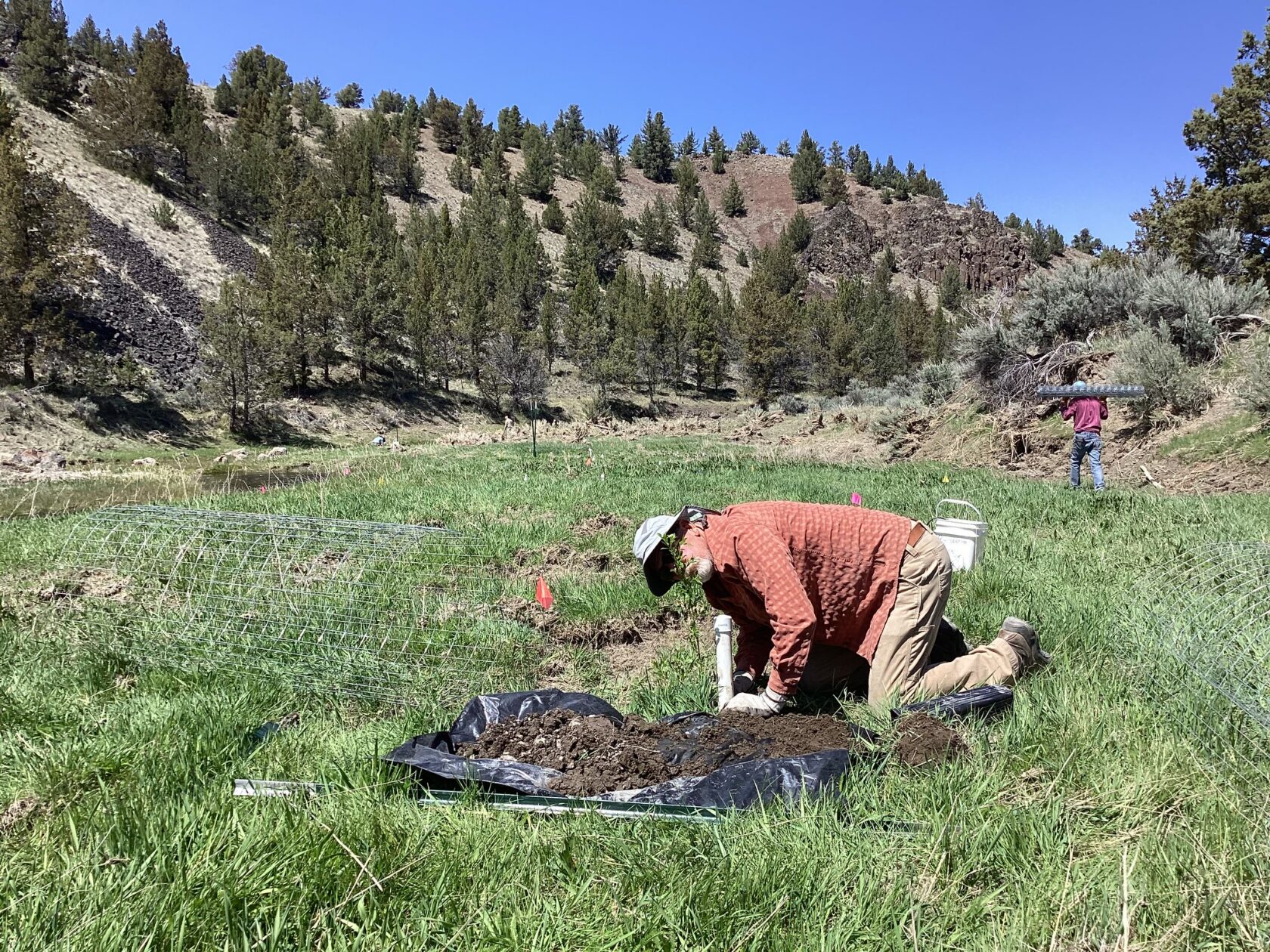
Volunteers plant trees. Photo: Greg Shine

Where native vegetation is lacking, ONDA plants a mix of trees and shrubs that will enhance habitat for wildlife, provide food and building materials for beavers, shade the stream to keep waters cool, and stabilize streambanks. The restoration work involves hauling plants to the work site, digging manual and machine-assisted holes, and installing and watering plants.